DASMA and manufacturer guidance checked October 2026
Owner handoff and service documentation checklist. Not a certification, DIY installation procedure or substitute for a qualified gate-system assessment.
Sources and scope checked .
An automated vehicle gate is a system, not just an operator. The moving gate, installation geometry, controls, pedestrian access and compatible protective devices all matter. This original owner-handoff checklist helps document what a qualified installer has assessed and demonstrated. It is not a DIY installation procedure, inspection certificate or compliance approval.
Start with the exact operator and gate manuals and a qualified gate-system professional. Do not use a person to test entrapment, bypass a safety device or improvise wiring. Public DASMA guidance explains why entrapment zones and monitored devices must be evaluated as part of the installed system.
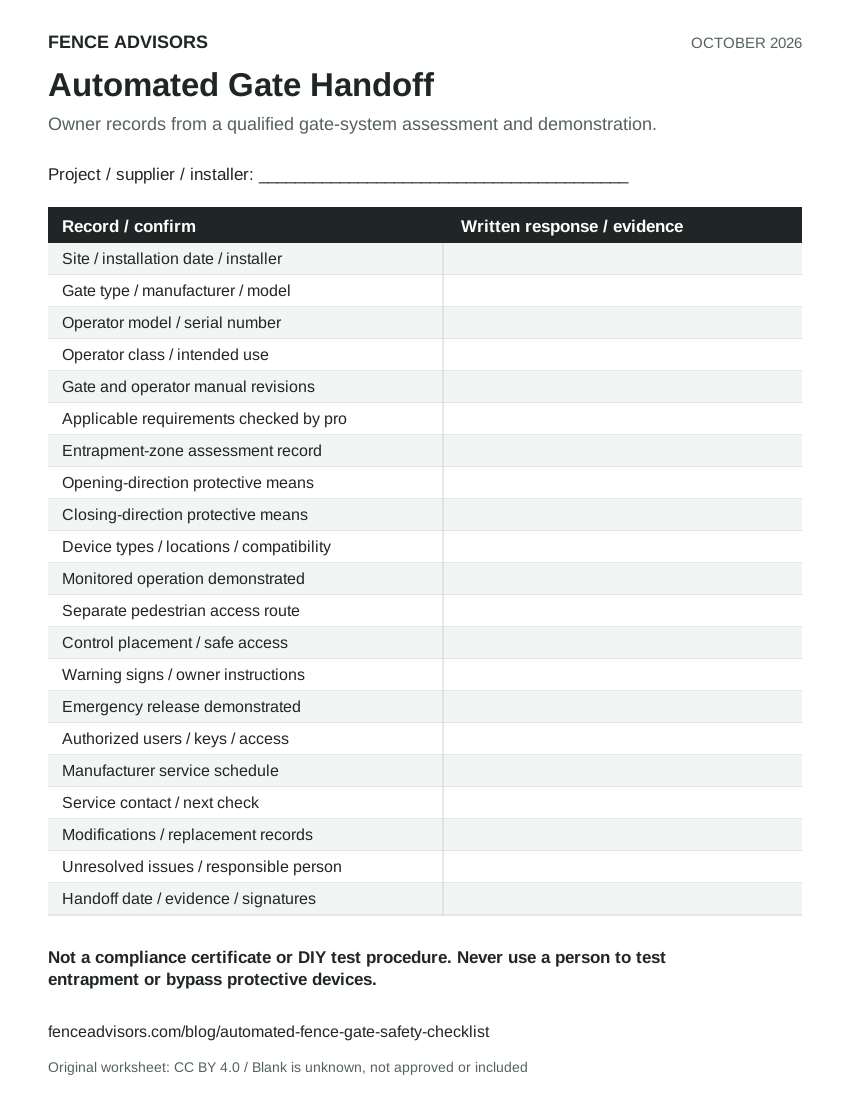
Printable automated gate handoff checklist
Download or embed this graphic
<figure>
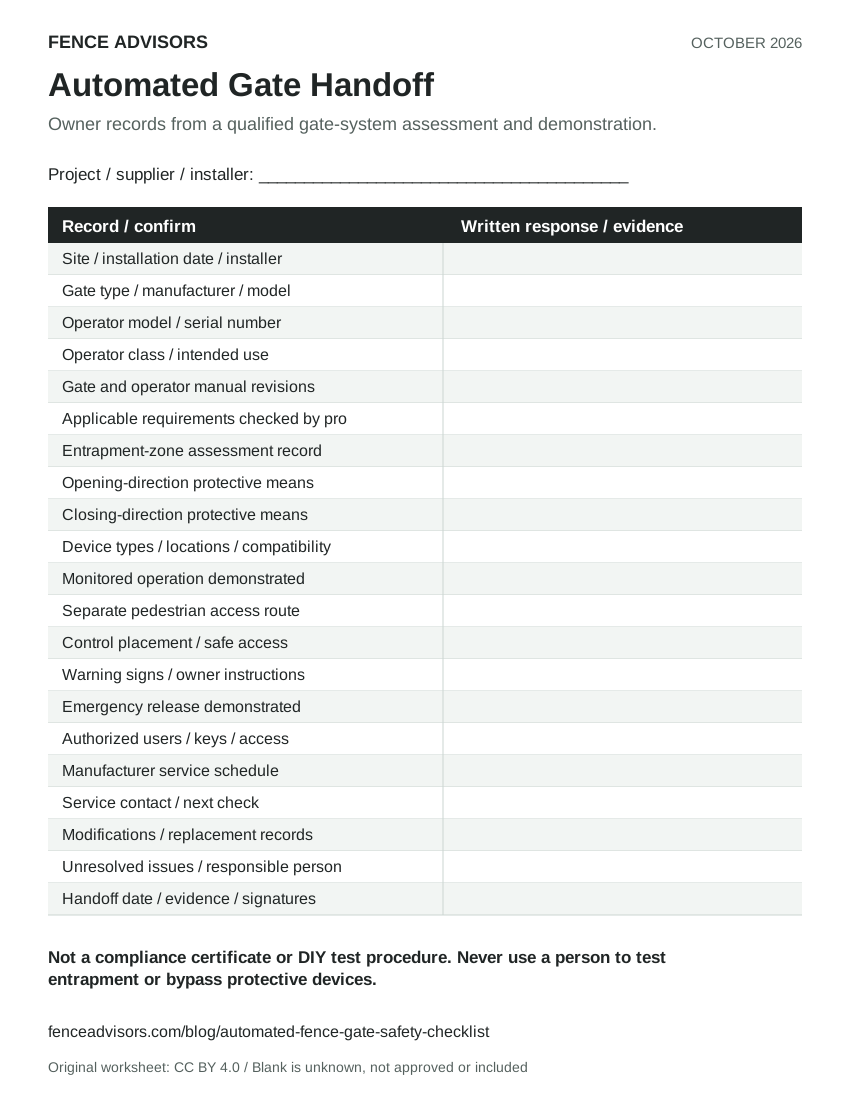
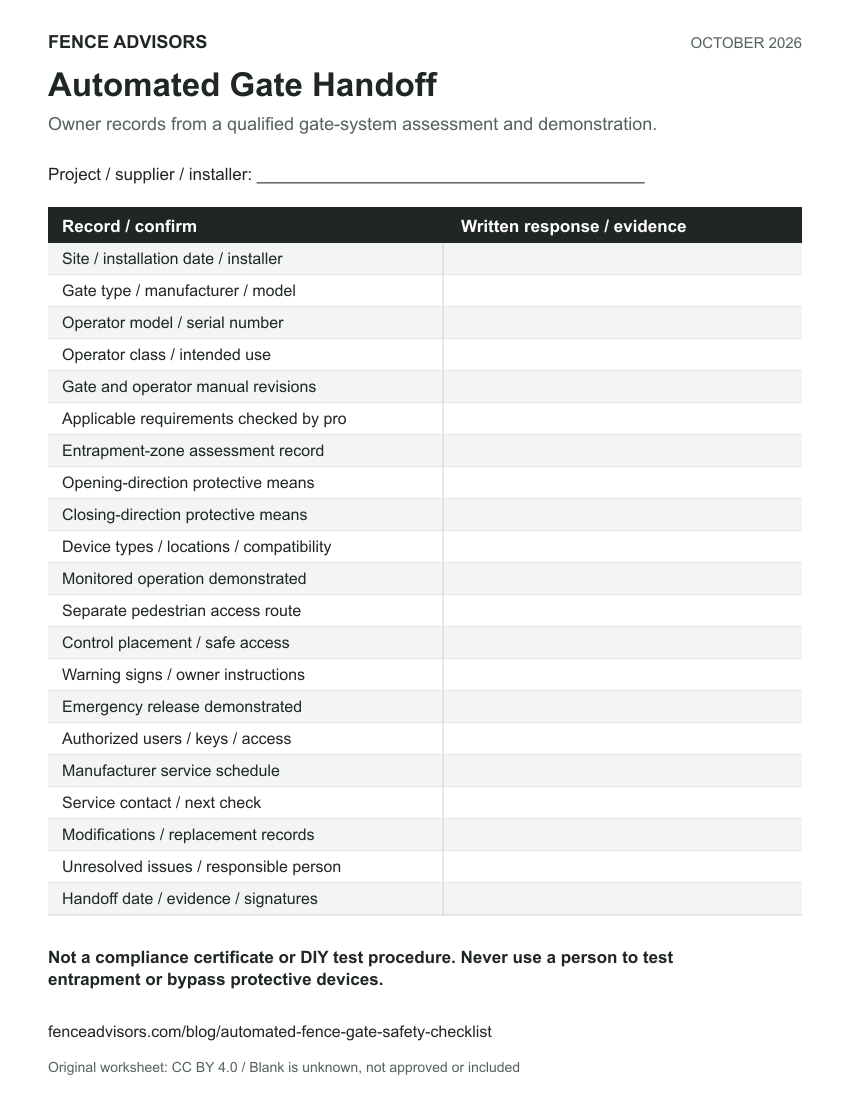
  <a href="https://fenceadvisors.com/blog/automated-fence-gate-safety-checklist"><img src="https://fenceadvisors.com/media/research/automated-gate-handoff.svg" alt="Handoff record for operator model/class, manual, separate pedestrian access, entrapment-zone assessment, monitored devices, installer demonstration, emergency release, warning signs and maintenance contacts." width="850" height="1100" loading="lazy" style="max-width:100%;height:auto"></a>
  <figcaption>Graphic: <a href="https://fenceadvisors.com/blog/automated-fence-gate-safety-checklist">Fence Advisors</a>. Source, period and limitations are in the linked article. Original graphic: CC BY 4.0.</figcaption>
</figure>
Keep the completed record with the manuals, product identifiers, site assessment and service information. A checked box without supporting documentation is not evidence that the entire system complies with every applicable requirement.
| Handoff record | What the owner should receive |
|---|---|
| Gate and operator identifiers | Manufacturer, model, serial number, gate type and installation date |
| Intended use | Operator class and the installer's confirmation that it fits the site/use |
| Current instructions | Applicable gate/operator manuals and device compatibility information |
| Entrapment-zone assessment | Written site-specific assessment of travel directions and hazardous areas |
| Protective devices | Type, location, compatibility and demonstrated monitored operation |
| Pedestrian access | A separate appropriate route; not a vehicle gate used as a pedestrian shortcut |
| Controls and warnings | Placement, access arrangements and required signage documented |
| Emergency operation | Installer demonstration and instructions for the actual system |
| Maintenance | Manufacturer schedule, service contact and documented checks |
The downloadable CSV has status, evidence and responsible-person fields. Mark an unresolved item unresolved; the template does not turn a missing assessment into approval.
UL 325 and ASTM F2200 address different parts
DASMA TDS 353 discusses gate operators and ANSI/UL 325 as well as the gate's installation/construction relationship to ASTM F2200. An operator listing is not a certification of an entire assembled gate installation. A gate's physical construction also does not prove that its powered operation is adequately protected. DASMA TDS 353.
The public technical sheet describes edition-specific requirements, including material effective in 2018. We reviewed that guidance, not the full text of every current standard or your local adopted requirements. The installer must verify the applicable editions, product listing, current instructions and site obligations. The general gate guide covers gate selection; it does not replace this powered-system assessment.
Assess entrapment zones rather than counting accessories
A photoeye or edge sensor is not a universal answer for every gate. Sliding, swinging and other systems have different travel, pinch and crush areas. Opening and closing directions can expose different hazards. DASMA describes independent protective means and monitoring within its requirements, with conditions by system and zone. Do not reduce this to one universal shopping list or claim that a particular count of devices makes all installations compliant.
Ask the professional to show where hazards were assessed, which means address each one, and how the selected devices are compatible with the operator. LiftMaster gate safety guidance discusses compatible external entrapment-protection devices for its systems; product-specific requirements are not automatically transferable to another operator.
Never defeat monitoring to make a gate run. If protective equipment faults or the installation seems unsafe, keep people away from the moving system and obtain qualified service using the manufacturer's instructions. Do not copy a garage-door obstruction test into a gate procedure: these are different systems and manuals.
Separate people from vehicle operation
DASMA's vehicular-gate guidance calls for separate pedestrian access. An owner should know that route, how visitors use it and what happens during a power or access-control failure. A button, keypad or remote does not eliminate the hazards created by a moving vehicle gate.
Have the installer document control placement, signage and the route without needing to reach through or stand in hazardous travel areas. Warning signs are part of the record, not a replacement for physical/system protections. Use the applicable instructions rather than this article to specify dimensions and device locations.
Demonstrate the actual emergency and maintenance procedures
Ask for an installer demonstration of the release and emergency arrangements for the exact system. Keep keys, instructions and authorized-user responsibilities documented. There is no universal release sequence suitable for every gate; stored forces and the gate's mechanical condition can matter.
Record the service schedule from the manufacturer, not an invented annual interval. Keep installation and service dates, device checks, changes to controls, and replacement-part details. Modifications may require reassessment; replacing one component should not silently invalidate the original compatibility record.
Use the checklist in a comparable written quote
Request a scope that identifies the gate assembly, operator, protective devices, electrical/access-control work, required assessments, handoff and servicing responsibility. Keep exclusions visible using the buyer checklist. A low operator-only price is not necessarily a complete automated-gate quote.
Use the contractor directory to find candidates, then verify their relevant gate-system qualifications, insurance and product experience independently. Directory presence is not a certification to install every powered gate. The commercial fencing guide addresses the wider project context.
Methodology and limitations
The worksheet is original Fence Advisors work, reviewed against public DASMA and manufacturer guidance in October 2026. It does not claim a survey of gate safety, inspect a site, reproduce complete standards or certify compliance. For a dangerous condition, qualified on-site assessment takes priority over an online checklist.
Frequently Asked Questions
Does a listed operator make my whole gate installation compliant?
No. The gate construction, site, intended use, controls and protective measures also require assessment. Verify the actual applicable requirements and manufacturer instructions with a qualified gate-system professional.
Can I test the gate by standing in its path?
No. Do not use people to test entrapment or bypass protective devices. Obtain a professional demonstration using the applicable manufacturer's safe procedures.
Is the handoff worksheet an inspection certificate?
No. It records documents, questions and responsibilities. A completed form does not certify UL 325, ASTM F2200 or local compliance.
Sources and Downloads
Original Fence Advisors graphics, data compilations and worksheet are available under CC BY 4.0. Retain source, period and scope when reusing data. This license does not relicense third-party documents or trademarks.
Corrections: editorial@fenceadvisors.com.
Related Research
Put your research to work
Estimate your budget, then compare fence companies in your area.
Get the next guide in your inbox
Fence costs, rankings, and what AI is telling homeowners — researched, no fluff.