CPSC 2026 report: fatalities 2021-2023; nonfatal injuries 2023-2025
U.S. children younger than 15 in pools and spas. Reported deaths and estimated injuries are different measures. Historical fencing evidence is identified separately.
Sources and scope checked .
The CPSC's 2026 report records 376 reported pool- or spa-related child drowning deaths per year, on average, in 2021-2023. Separately, it estimates 5,900 emergency department-treated nonfatal drowning injuries per year in 2023-2025. Both cover U.S. children younger than 15, but the periods and measurements differ. They are not two parts of one annual total. CPSC executive summary.
Pool fences are one layer against unsupervised access, not a replacement for active adult supervision. This reference separates drowning surveillance from fence-effectiveness research so the numbers do not imply that any product prevents a fixed percentage of deaths.
Pool fence safety statistics at a glance
| Measure | Figure | Period and population |
|---|---|---|
| Average annual reported fatalities | 376 | 2021-2023; children under 15 |
| Total reported fatalities | 1,128 | 2021-2023; children under 15 |
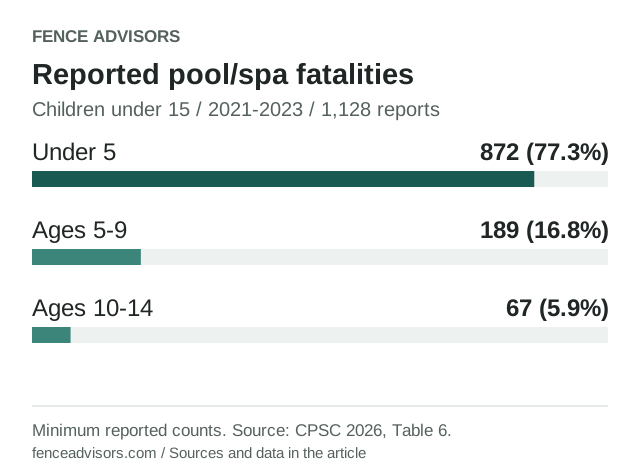
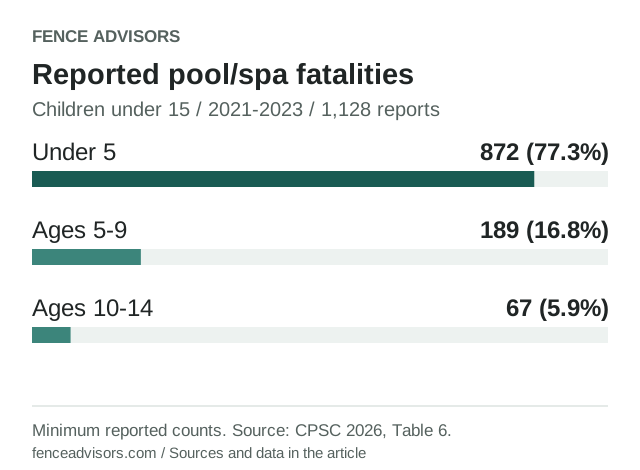
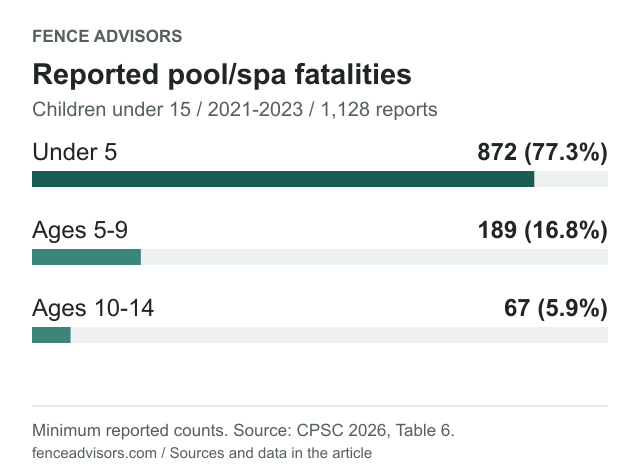
| Fatalities in children under 5 | 872; published share 77% | 2021-2023 reported deaths |
| Average annual estimated nonfatal ED-treated injuries | 5,900 | 2023-2025; children under 15 |
| Published under-5 share of estimated nonfatal injuries | 71% | 2023-2025 weighted estimates |
| Estimated nonfatal injuries admitted or transferred | 42% | 2023-2025; children under 15 |
Source: CPSC 2026 report, executive summary and Tables 1 and 6. Deaths are reports received by CPSC; injury estimates use the weighted NEISS hospital sample. Neither is a count of fence failures.
Which ages account for reported fatalities?
Download or embed this graphic
<figure>
  <a href="https://fenceadvisors.com/blog/pool-fence-safety-statistics"><img src="https://fenceadvisors.com/media/research/pool-spa-reported-fatalities-age.svg" alt="Of 1,128 reported pool/spa fatalities in children under 15 during 2021-2023, 872 were under 5, 189 were 5-9, and 67 were 10-14." width="640" height="470" loading="lazy" style="max-width:100%;height:auto"></a>
  <figcaption>Graphic: <a href="https://fenceadvisors.com/blog/pool-fence-safety-statistics">Fence Advisors</a>. Source, period and limitations are in the linked article. Original graphic: CC BY 4.0.</figcaption>
</figure>| Age | Reported deaths, 2021-2023 | Calculated share |
|---|---|---|
| Younger than 5 | 872 | 77.3% |
| 5-9 | 189 | 16.8% |
| 10-14 | 67 | 5.9% |
| Total under 15 | 1,128 | 100% |
Source: CPSC Table 6. Fence Advisors calculated one-decimal shares from 1,128 reported deaths. The report rounds the under-5 share to 77%. These are age shares within reported cases, not a child's probability of drowning.
CPSC considers the fatality figures minimum counts: not every death is necessarily reported, and previous years can be revised. It explicitly says these counts cannot determine trends in the U.S. population. A year-to-year difference is not proof that national incidence grew or fell. Table 6 note and Appendix A.
Residential pool statistics and the denominator
| Location | Share of reported fatalities, children under 15 |
|---|---|
| Home | 51% |
| Family / friend / acquaintance | 15% |
| Neighbor | 5% |
| Public / community / business | 15% |
| Undisclosed | 14% |
Source: CPSC Table 10, 2021-2023. Condominium and apartment-complex pools are categorized as public/community/business.
The home, family/friend/acquaintance and neighbor rows add to 71%. That is arithmetic on rounded report percentages, not the share of all U.S. pools, all-water drownings or incidents without fences. The 14% undisclosed category remains in the denominator.
What do the nonfatal estimates cover?
| Year | Under 5 | Ages 5-14 | All under 15 |
|---|---|---|---|
| 2023 | 4,100 | 1,100 | 5,200 |
| 2024 | 4,300 | 1,900 | 6,200 |
| 2025 | 4,200 | 2,000 | 6,200 |
| Published annual average | 4,200 | 1,700 | 5,900 |
Source: CPSC Table 1. These are estimated hospital emergency department-treated injuries, rounded to the nearest hundred, not every nonfatal incident. The published 71% under-5 share uses unrounded weighted estimates; dividing displayed rounded averages is not a better calculation.
The report adjusted 2023 NEISS weights after a sampling-frame change. Earlier annual reports may therefore not be directly interchangeable. Do not divide fatality counts by nonfatal estimates to calculate a case-fatality rate, or add 376 and 5,900 as total annual incidents. Periods, methods and case coverage differ. CPSC Appendix A.
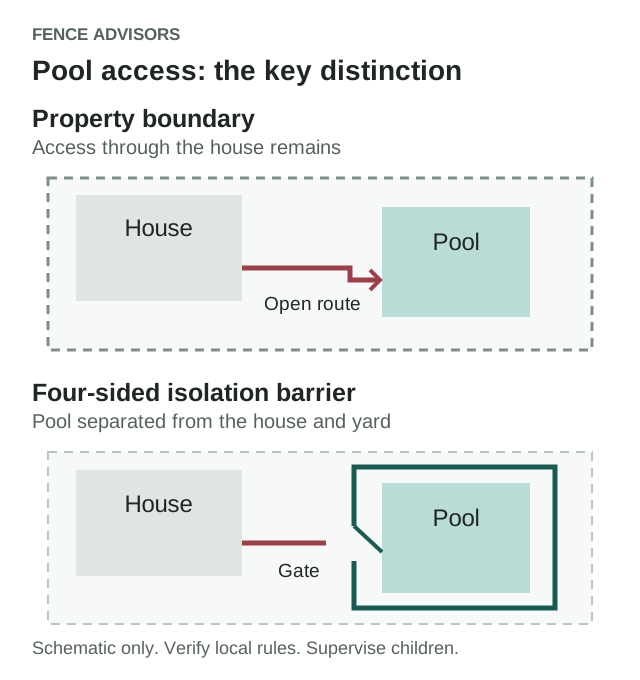
Four-sided pool fence effectiveness: what is the evidence?
Download or embed this graphic
<figure>
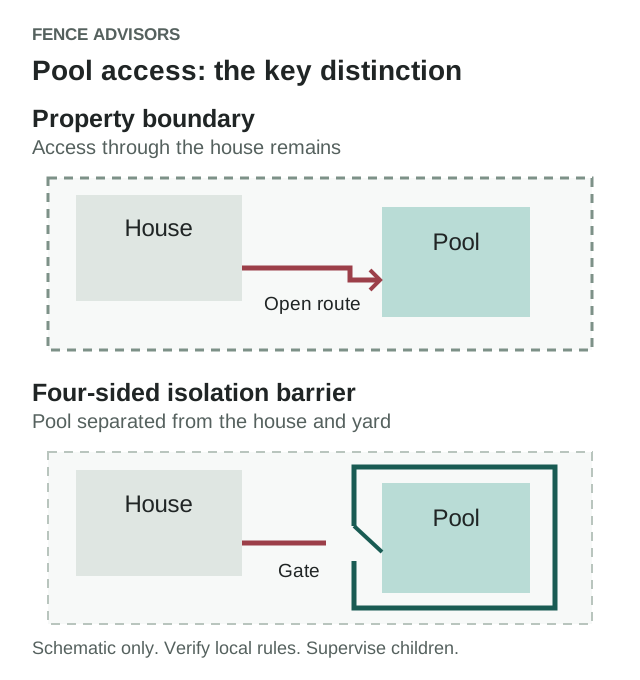
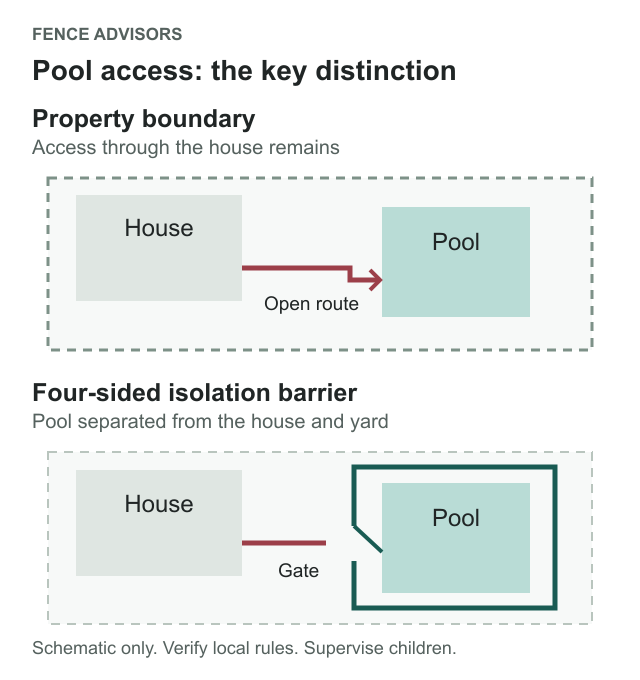
  <a href="https://fenceadvisors.com/blog/pool-fence-safety-statistics"><img src="https://fenceadvisors.com/media/research/pool-isolation-barrier-diagram.svg" alt="Overhead layouts: a property-boundary barrier permits access through the house; a four-sided isolation barrier separates the pool from the house and yard through a dedicated gate." width="640" height="680" loading="lazy" style="max-width:100%;height:auto"></a>
  <figcaption>Graphic: <a href="https://fenceadvisors.com/blog/pool-fence-safety-statistics">Fence Advisors</a>. Source, period and limitations are in the linked article. Original graphic: CC BY 4.0.</figcaption>
</figure>
A Cochrane review included three case-control studies, with searches last updated in October 2006 and no randomized trials. It is historical observational evidence, not a new 2026 experiment or testing of a current fence brand.
| Historical comparison | Odds ratio | 95% confidence interval |
|---|---|---|
| Fenced versus unfenced pools: drowning or nonfatal drowning | 0.27 | 0.16-0.47 |
| Four-sided isolation versus three-sided fencing: drowning | 0.17 | 0.07-0.44 |
Source: Cochrane main results. The second result can be expressed as 83% lower odds (1 minus 0.17). Odds are not absolute risk. It does not guarantee that a given fence prevents 83% of deaths or makes unsupervised access safe.
A property-boundary fence can leave a route to the pool through the house. Isolation fencing separates the pool from the home and yard. CPSC barrier guidance supports complete enclosure and secure gates; current local requirements and site details still need checking.
Why scenario counts are not fence failure rates
CPSC Table 12 categorizes reported under-5 fatalities as 59% lost contact or knowledge of the child's whereabouts, 19% insufficient information, 13% observed near or in the pool/spa, and 10% barrier integrity or circumvention. CPSC Table 12.
The rounded percentages total 101%. The barrier category does not establish a failure rate: there is no denominator of installed fences. Nor does it mean all other cases had no fence or would certainly have been prevented by one.
Use the evidence in a real barrier project
- Verify local rules. The pool fence laws by state guide helps locate official sources. The permit authority determines what applies to the property.
- Specify access controls. Check enclosure, gates, latching, openings, climbable features and access doors against current requirements. Start with the pool fence requirements guide and CPSC guidance.
- Compare written scope. Use the buyer checklist and quote worksheet to separate hardware, permits, removal and exclusions from fence footage.
- Keep other protection layers. CPSC's 2026 advice includes active adult supervision, swimming skills, CPR, barriers and safe drain covers. No barrier replaces supervision.
Research project experience in the contractor directory. A listing is not certification that a proposed pool barrier complies with law.
Methodology and citation
Sources were checked October 3, 2026. Selected CPSC tables were transcribed into the JSON; CSV and age graphics use the same input. Calculated age shares use 1,128 reported deaths; weighted injury percentages retain CPSC's rounding.
The download is a report excerpt, not incident-level data or a fence-effectiveness dataset. The older barrier booklet supplies design principles, not current drowning totals. This is general research, not a medical assessment, legal determination or approval of any fence.
Suggested citation: Fence Advisors, Pool Fence Safety Statistics, October 3, 2026, using CPSC's 2026 report: fatality counts 2021-2023 and nonfatal estimates 2023-2025. Cite Cochrane separately for historical effectiveness findings, retaining its study type and search date.
Frequently Asked Questions
How many children drown in pools each year?
CPSC's 2026 report records an annual average of 376 reported pool/spa deaths in children under 15 during 2021-2023. These are minimum reported counts, not all-water fatalities or a 2026 annual death total.
Do four-sided pool fences reduce drowning?
Historical Cochrane evidence found lower odds with isolation rather than three-sided fencing: odds ratio 0.17, 95% confidence interval 0.07-0.44. The review included three case-control studies and searches through October 2006, not a guarantee for any particular fence.
Are most reported fatalities in very young children?
Children under 5 accounted for 872 of 1,128 reported deaths in 2021-2023, approximately 77% in CPSC's summary. This describes case composition, not an individual risk estimate.
Can these numbers measure fence failures?
No. The report lacks a representative denominator of installed fences and is not a fence-failure study.
Sources and Downloads
- CPSC 2026 pool or spa submersion report
- CPSC report announcement, June 24, 2026
- Cochrane pool fencing review (searches through October 2006)
- CPSC Safety Barrier Guidelines for Residential Pools
Original Fence Advisors graphics, data compilations and worksheet are available under CC BY 4.0. Retain source, period and scope when reusing data. This license does not relicense third-party documents or trademarks.
Corrections: editorial@fenceadvisors.com.
Related Research
Put your research to work
Estimate your budget, then compare fence companies in your area.
Get the next guide in your inbox
Fence costs, rankings, and what AI is telling homeowners — researched, no fluff.