NIST 2022 summary and November 2025 TN 2357; current IBHS FAQ checked October 4, 2026
NIST 2022 summary and 2025 TN 2357 abstract/selected report passages; IBHS program guidance separately identified. Not a population failure rate, brand ranking or safe-distance prescription.
Sources and scope checked .
A fence can become a pathway for fire toward a home, and "composite" does not describe one predictable fire behavior. NIST's November 2025 study found markedly different behavior among three tested composite fence designs. Earlier NIST work also identified hazards from mulch and parallel combustible fences. The useful question is about the whole assembly, nearby fuel and layout, not a blanket material label. NIST TN 2357; NIST 2022 summary.
This is a research interpretation, not a claim that we have fire-tested products or can approve a safe installation. It separates experiments, a voluntary home-designation program and the decisions a homeowner should confirm locally.
What the 187 earlier experiments showed
NIST's 2022 fence-and-mulch summary describes 187 experiments across fuels and configurations; it is not a count of 187 wildfires or a fence failure-rate survey. NIST: residential fence and mulch fire study.
NIST's summary describes fuels burned alone and in combinations, including wood, vinyl and wood-plastic fencing and several mulch materials. Fires involving a fence and mulch could be more severe than a fence alone. Parallel combustible fences produced particularly intense behavior, and firebrands could ignite a target downwind. NIST 2022 news summary.
The practical lesson is to inspect connected fuel, not only the panels. Dry material at the base, stored items and a neighbor's parallel fence can change the situation. A property-line separation is not automatically a firebreak. The study summary's severe experimental outcomes do not establish a universally safe separation or the time a homeowner would have to respond to a real wildfire.
The 2025 composite fence test conditions
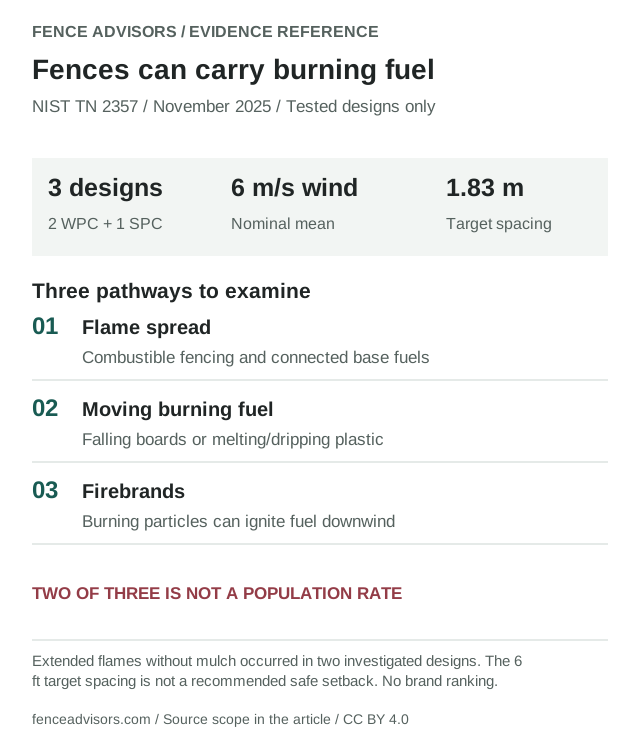
NIST TN 2357 (2025) tested two wood-plastic composite fence designs and one steel-plastic composite design with a nominal mean wind of 6 m/s (about 13 mph) and a target structure 1.83 m (6 ft) downwind. NIST TN 2357: composite fence fire experiments. NIST TN 2357 report PDF.
| Experimental feature | Source description | Interpretation boundary |
|---|---|---|
| Fence designs | Two wood-plastic composites and one steel-plastic composite | Three designs, not a representative product sample |
| Wind | Nominal mean 6 m/s, approximately 13 mph | Imposed experimental wind, not every wildfire condition |
| Target structure | 1.83 m, or 6 ft, downwind | Test geometry, not a recommended safe setback |
| Ignition | Propane burner at the ground, at the end away from the target | Defined ignition scenario, not every ignition mechanism |
| Mulch comparison | Tests with and without shredded hardwood mulch below the fence | Material and configuration-specific comparison |
Source: NIST TN 2357 abstract and report setup. A target mulch bed at the structure's base also helped test ignition by flames or firebrands. The report includes small-sample cone-calorimeter testing; those sample tests are not interchangeable with a full installed-fence scenario.
Download or embed this graphic
<figure>
  <a href="https://fenceadvisors.com/blog/fence-wildfire-risk-research"><img src="https://fenceadvisors.com/media/research/fence-wildfire-pathways.svg" alt="NIST 2025: three composite designs, nominal 6 m/s wind and a target 1.83 m downwind; two designs produced extended flames without mulch. Flame spread, falling or dripping fuel and firebrands are separate pathways. Not safe-distance guidance." width="640" height="740" loading="lazy" style="max-width:100%;height:auto"></a>
  <figcaption>Graphic: <a href="https://fenceadvisors.com/blog/fence-wildfire-risk-research">Fence Advisors</a>. Source, period and limitations are in the linked article. Original graphic: CC BY 4.0.</figcaption>
</figure>
Why composite is not one fire behavior
In NIST's 2025 full-scale tests, two of the three investigated composite fence designs produced flames above and well downwind of the fence even without mulch beneath it; this is not a 67% population failure rate. NIST TN 2357: composite fence fire experiments.
NIST observed burning boards falling from one wood-plastic design and burning plastic from the steel-plastic design; a fence containing steel is not therefore an entirely noncombustible assembly. NIST TN 2357: composite fence fire experiments. NIST TN 2357 report PDF.
| Tested design | Behavior described by NIST | What not to conclude |
|---|---|---|
| WPC design 1: vertical boards | Frame distortion and burning boards falling to the sides | One tested wood-plastic assembly, not all vertical fencing |
| SPC design: steel/plastic | Melting/dripping plastic, large flames and wind-driven burning strands | Steel-containing assembly was not wholly noncombustible |
| WPC design 2: horizontal boards | Boards sank as consumed; slower localized burning/glowing without mulch | Less severe behavior in these tests, not fireproof or a general horizontal-fence approval |
Source: TN 2357 abstract and results. We use neutral design labels and do not infer commercial brand identities. The second wood-plastic design had less severe behavior in the cited experiments; less severe is not noncombustible, fireproof or safe in all circumstances. Nor does a horizontal board orientation alone reproduce that design's result.
Falling boards, molten plastic and wind-carried firebrands matter because they move burning fuel beyond the original fence line. A steel frame does not remove the combustible content of attached plastic components. If evaluating an assembly, ask for evidence matching the actual product, layout and intended use, rather than apply a result from another product with a similar marketing name.
What the IBHS five-foot zone does and does not mean
The IBHS Wildfire Prepared Home FAQ requires fencing within its 0-5 Foot Noncombustible Zone to be noncombustible and does not accept vinyl there; this is a program requirement, not a statement of every local law. IBHS Wildfire Prepared Home FAQ.
The FAQ specifically rejects a "fire-resistant" vinyl fence within that zone. It also describes measurement differences involving exterior walls and decks. Use the current program's full instructions for the actual property rather than measure five feet from an arbitrary fence post. IBHS Wildfire Prepared Home FAQ.
Three boundaries are important. A program requirement is not automatically a local ordinance. Replacing only a short fence segment does not establish a home's designation eligibility, because the program has other requirements. Finally, no five-foot segment can make a home immune to wildfire. Confirm applicable requirements with the fire/building authority and, if seeking the designation, the program itself.
Review the fence-to-home pathway
| Review area | Question to document |
|---|---|
| Connection to the home | Where do the fence and gate approach, touch or lead toward the building? |
| Full assembly | Which panels, rails, caps, frames and accessories are combustible? |
| Base fuels | Is mulch, leaf debris or stored material connected to the fence? |
| Neighboring layout | Are there parallel combustible fences or other connected fuels? |
| Applicable requirements | Which local rule or voluntary program applies, and how is distance measured? |
| Safe access | Will proposed changes preserve required egress and gate operation? |
| Documentation | What product evidence, permission and qualified review supports the change? |
This is an original review record, not instructions to conduct a burn test. Do not test a fence with a flame, remove critical barriers or obstruct an exit. Arrange safe, qualified review and property/HOA approvals where needed. Find local contractors to discuss an actual replacement scope and use the buyer checklist to put that scope in writing.
Keep other claims separate. A recycled-content statement does not establish noncombustibility. A Trex specification or warranty is not a fire-safety approval, and this NIST reference is not a tested rating for that brand.
Methodology and reuse
We reviewed NIST's 2022 news summary, the 2025 TN 2357 publication abstract and selected abstract/setup/results passages from the first 100 of the report's 169 PDF pages. We did not review the entire report, every full fire standard or all local wildfire codes. Selected IBHS FAQ provisions were checked October 4, 2026. The original graphic and reference CSV retain test conditions and distinguish program guidance. Cite the 2025 publication year, tested designs and setup with an outcome; do not turn "two of three" into a market-wide percentage.
Frequently Asked Questions
Did NIST find that 67% of composite fences fail in wildfire?
No. Two of three investigated designs produced extended flames in the cited test conditions. Three selected designs are not a representative sample or a population failure rate.
Is a steel-plastic composite fence noncombustible because it contains steel?
Not on that basis. NIST observed burning, melting and dripping plastic in its tested steel-plastic assembly. Evaluate the complete assembly and applicable evidence.
Is a six-foot separation from a fence a safe wildfire setback?
This study does not establish that. Six feet was the downwind target spacing in the 2025 experimental setup, not a recommended safe distance.
Sources and Downloads
- Test conditions, observations and program boundariesCSV
- Citable findings, exact sources and evidence boundariesCSV
- Source dates, review scope and original modelsJSON
- NIST: residential fence and mulch fire study
- NIST TN 2357: composite fence fire experiments
- NIST TN 2357 report PDF
- IBHS Wildfire Prepared Home FAQ
Original Fence Advisors graphics, data compilations and worksheet are available under CC BY 4.0. Retain source, period and scope when reusing data. This license does not relicense third-party documents or trademarks.
Corrections: editorial@fenceadvisors.com.
Related Research
Put your research to work
Estimate your budget, then compare fence companies in your area.
Get the next guide in your inbox
Fence costs, rankings, and what AI is telling homeowners — researched, no fluff.